Showing posts with label Michael Polanyi. Show all posts

5.13.2017

the definitive quid


"I seemed to be living under a bell jar, and yet I felt I was close to something essential.  A subtle veil, a thread, barely separated me from the definitive quid."    - Eugenio Montale

Once in a while, in the midst of your bibliophiliac meanderings, you happen upon a book like Ezra Pound's would-be "ball of light in one's hands" - the true intellectual manna, the book you've been searching for half-consciously.

Not long ago I tripped over such a book : a work in philosophy by one Borden Parker Bowne, published in Boston (by Houghton Mifflin) in 1908, titled simply Personalism.

This book (and the Cambridge academic group loosely associated with it - now called "Boston Personalism") played a role in Martin Luther King's early thinking.  I suppose I was drawn to it for that reason, and due to my own prior interest in "the person", the personal (in an abstract, quasi-philosophical sense).  I suppose it was the same focus which had motivated my enthusiasm (7 years or so ago) for the philosophical writings of Michael Polanyi - another advocate for the "person".

I'm not in the mood for strenuous, inadequate paraphrasing tonight.  You'll just have to read Bowne's Wikipedia entry, maybe look further yourself.  Prof. Wiki calls Bowne "an acute critic of mechanistic determinism, positivism, and naturalism."  He was also an acute critic of abstraction, idealism, and totalizing systematics.  Nor he was one of those run-of-the-James American pragmatists.

Bowne seems to be located somewhere in that dawn twilight between late-Victorian disenchantment, on the one hand (the Brown Decades), and early 20th-century dynamic physics (relativity, uncertainty, quanta) plus mid-20th-century Existential neo-Medieval (Eliot) suprematism/despair, on the other.  He's a very sharp knife... a very free-thinking kind of Methodist minister, if you can imagine that.

What I mean to say : Bowne seems to offer a logical, informed, & convincing philosophical ground for my own more cloudy poetical conceptions.  He makes a rational argument for the plausibility of a "metaphysical" universe - originating in a living creative benevolent ineffable divine Person, and manifested (or progressively accomplished) in an experiential reality of free spiritual persons ("souls", you might say - human beings) joined in fellowship.  A reality of Persons.

And he's a pretty incisive critic of rival theories : scientific positivism, materialism, determinism - any kind of "objectivity" which reduces human beings to pawns, cannon-fodder, statistics - chips in a cosmic-mechanical system.  He shows them to be unthinking extrapolations from both common sense (ordinary experience) and science (the useful application of observation & measurement to ordinary experience) - neither of which give access to meaning in the philosophical sense.  The final cause(s) & purpose(s) of existence - beyond both common-sense utility and scientific measurement - have yet to be comprehended.

Bowne provides, I guess, a firm & bright "phenomenology" (probably wrong term) of the Person : not just the physical, embodied individual, but the thinking, feeling, invisible "subject" - the living, breathing personality/soul/spirit - the invisible Me and You beyond physical cycles & change - and related to (stemming from) the original, originary, creative Act of the perfect invisible ineffable universal Spirit-Person in the hidden heart of our own beings, and at the center of the Real.  Thus the individual human person exists as an imperfect, partial, limited image or "child" of the Spirit from whom he or she is created (& thus, also, "we hold these truths to be self-evident..." etc.).

Imagine how such a particular philosophical firmness or intellectual integrity might fortify the confessional faith/confidence of someone like Martin Luther King.  And to what heights (& depths) that might lead him.

I'm nowhere near being a philosopher.  I'm just a poet - but maybe a poet with philosophical tendencies.  I've always had an interest - since childhood, I daresay - in the "big picture".  My conception of poetry has always harbored a polemical aspect : I'm against the abstract objectification of the human person - the various philosophies, dogmas, pseudo-scientific theories, & ideologies aligned against the human being as a free spiritual-material entity with a future.  I think of poetry as a force of expression - a bearing-witness to this living, breathing, personal, metaphysical dimension of the human soul, persisting in relation to that benevolent over-arching Love-Plenitude-Origin-Being we call God.

Many inured cultural habits of the modern mind militate against the patterns of such a viewpoint.  But like Eugenio Montale, I feel myself on the edge, walking along a wall topped with broken glass - so near that definitive whatness, just beyond this thin veil of worn threads...

I feel we are on the cusp of a new cultural Aeon or Era.  The heavy meteoric Stone (Mandelstam's akme-kamen) of divine Presence hovers near again... the Ghost of Manitou, the leader of the Ghost Dance... the human incarnation, the global human per se, arises at the crossroads of time & reality.

The human soul is integral, invisible, personal... & stands under judgement, in relation (to the horizontal-vertical, the neighbor and the Spirit).  Nothing in the universe is either objectified or determined.  Your soul is alive as it revolves, turning toward its own intelligible Origin.

Of course, this could all be phony mumbo-jumbo.  But poetry stands as a criterion for dialogue, simply because poetry is undetermined by anything but dialogue. It emerges out of the living encounter between speakers & listeners, listeners & speakers.  Poetry is the opposite of discourse, lecture, prose - because it recognizes (intuitively) that it bears witness to a creative force both proportional to and incommensurable with itself : the mysterious origin of life, love, beauty, truth (& poetry itself).

I'm not suggesting that poetry per se has some special role in advancing this new Aeon.  This is only my own personal application of poetic resources toward a particular polemical end.  Poetry & State, in general, should both keep a courteous distance from Religion.

But we have had enough of Man the cipher, Man the factor in an abstract design.  We live in a dense world of love & sleep, of conscious & unconscious motive... moving in a dance of form & feeling.  Man the spiritual Person abides at the center, amid vast fields of other ineffable Persons (invisible heights & depths).

I believe in the ever-living Spirit, shaping the cosmos toward miraculous reconciliations & renewals.  I believe that Beauty is the signature of a creative Mind as Source; & that moral beauty - the beauty of compassionate & selfless love for all Creation - has been imprinted upon human history, like the trace of a smile across the ravaged face of suffering & grief.   Mary, Francis... John... the women at the Cross, the Tomb.

The tomb, the crossroad, dead end, turning-point.... anonymous blind alley, where the unknown soldier (Everywoman, Everyman) turns toward the hills.  Walk on up there...
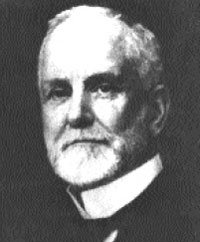
Borden Parker Bowne

12.07.2014

Personal Advent

Poets employ a type of fuzzy laser-light, reflecting & deflecting the living & dead poets who seem to be signaling them in turn.  Semaphore, smoke-signals.  I keep going back to the main poets who interest me, while also trying to spread out & venture into new regions.  I circle around Ezra Pound, for one.  There's a strange blinking mixed code emanating from him, so right & so wrong.

For some reason over the past year or so I've been delving a lot into anthropology & ancient belief systems & mythologies & prehistoric rites & the roots of human motivation... at least the theories about those roots...

I wrote an essay about the "New Gnostic" poets a while back (published online in the Coldfront zine).  Pound is important in that constellation of developments, along with Yeats.  Both of them deeply caught up in hermetic & occult philosophy.  Am now re-reading a good book on this topic, The Celestial Tradition : a study of Ezra Pound's The Cantos, by Demetres Tryphonopoulos.  The author explores what was called "the rising psychic tide" of all kinds of heterodox & occult beliefs & practices around 1880-1920, from the scholarly to the "thaumaturgic" & the fraudulent/comical hocus-pocus (see "Madame Sosostris" in Eliot's The Waste Land, for a sample).

Pound took no interest in Yeats' style of "practical" spiritualism (magic).  His was a more theoretical focus on the so-called ancient hermetic wisdom.  & his sifting of those traditions and values through the shaping of his poetry was very refined & remarkable, in some ways - and simultaneously extremely harmful & ugly.  His anti-semitism ran deep, his ideology always promoting the "pure, clean, luminous" mythology of the Greeks & the Romans, as opposed to the "dirty, evil" oppressions of the Judeo-Christian (Biblical) cultures.  He was fascinated by Catholicism - but as an expression of more ancient pagan "truths".

Just setting aside for a moment the hatefulness of Pound's anti-semitism - which parallels so closely the despicable Nazi ideology & program of degradation & de-humanization - I am struck by the irony of Pound's very serious, & sometimes beautiful, devotion to the spiritual heights of philosophical-poetic Wisdom.  As Tryphonopoulos so cogently explains, The Cantos are designed not as a narrative journey so much as a mystical initiation.  The process of reading The Cantos is meant to lead the seeker toward an inner spiritual enlightenment, joining the mind through poetry with the heights of wisdom represented by Confucius, the medieval saints & theologians, Ovid, Dante, etc. etc.  It's a very high-minded symposium of mystic illuminati, to which Pound is offering the reader an exalted poetic invitation.

What do I mean by "irony" in this case?  I'm thinking of the juxtaposition between Pound's fervent philosophical/mystical theme and his actual spiritual blindness.  There is the sense, reading his biographies, that perhaps, toward the end of his life, he himself had some awareness of this contrariety, this impasse.  Of course by calling his situation one of "spiritual blindness" I am expressing my own personal worldview...

The legacy of Biblical/Judaic/Christian spirituality includes, at its foundation, the sense that the Creator of the Universe (as we know it) is somehow "personal".   I see here a root contrast with Yeats, Pound, and the legacy of Neo-Platonism & hermetic gnosis.  In their case, spirituality and wisdom are a progress toward a kind of abstract higher wisdom itself.  The seeker is transfigured by spiritual knowledge into a kind of divine being.  Whereas, for Judaism & Christianity, spirituality is ultimately a relationship.  Though we cannot comprehend how the Origin of the Universe could possible be personal - except in some form of the person who reaches down into our own limited vision of the same - yet that is what we sense & believe the case to be.

This is underwritten (for Christianity) by the Trinitarian doctrine of "persons".   The philosophical synthesis (Greek-Judaic) achieved by such thinkers as the Byzantine monk Maximus the Confessor seems foundational - if not yet complete - in this regard.  (Not yet complete, in that while it represented a philosophical synthesis, it did not yet express a full reconciliation with Judaism : a task for the future.)  God is simultaneously present in the original Creator-Spirit, in his "Son-Servant" (Jesus), and in the "Holy Ghost" (present in the world, in infinite manifestations, now and everywhere).  In this way our notion of "person" is not abstracted into some merely transcendent sphere, but is fused with the personhood represented by a particular, historically-contingent, individual - which then serves as a kind of template for humankind in every other situation (rooted in loving relationship).  

For Pound, apparently, the essence of spirituality can be characterized as subjective experience.  For Judaism & Christianity, on the other hand, both the beginning and the end of spirituality rests in relationship.  This is not to say that Ezra Pound did not cherish his own dreams of utopia, human fellowship, and social justice.  But his basic orientation toward knowledge and wisdom - as a kind of abstract goal or measure, something to be achieved and learned - leaves aside any acknowledgement or  recognition of the prior (originating) presence of a sacred Personhood.  The fleeting appearances of Diana or Aphrodite as psychological experiences do not seem, in the end, to provide a firm ground for belief.  But he was searching.

I realize for some this is only another mode of mumbo-jumbo.  But I find reasonable support for this position in, among other places, the 20th-cent. philosophy of the scientist and polymath Michael Polanyi.  Polanyi's major work, Personal Knowledge, is a theory of epistemology.  What is knowledge, actually?  And how do we know anything?

For Polanyi, as his book title implies, all knowledge - including objective, scientific knowledge - is grounded and bounded by human subjectivity - by "personhood".  We don't develop "new knowledge" in the sciences, or any other field, without the mediation of human persons.  This sounds pretty obvious (in my sketchy summary) : but Polanyi draws out its consequences in quite profound ways.  He is able to bring the materialism and objectivity of 19th & 20th-cent. scientific positivism back into the moral/spiritual matrix of human persons : which was what Yeats & Pound themselves set out to do, a generation earlier.  With "faulty instruments" (cf. Eliot's Four Quartets).  The great ideological struggle of the "two cultures" (science and art, science & humanism, science & religion) finds a philosophical reconciliation in Polanyi's epistemology : one which Yeats & Pound so brilliantly sought, & so dramatically failed to find.


Michael Polanyi

3.12.2014

Cosmic frame

I watched the first episode of "Cosmos", the science TV program hosted by Neil deGrasse Tyson.  Tyson made a brief appearance in my long poem Forth of July, 10 years ago.

The initial episode laid out a fairly superficial and standard historical contrast between science and established religion.  But the focus on Giordano Bruno was interesting, and the facts of that case (& other such examples of the persecution of free thought) are pretty much beyond dispute.

What occurs to me, though, is that the program seems to project some implicit philosophical or perhaps spiritual aspects.  We watch Mr. Tyson sail through cosmic space and time, alone, in his cute spaceship, which looks like a sleek little smartphone.  & at the conclusion, the host pulls out an old datebook belonging to his mentor, Carl Sagan, & shows us Sagan's note scheduling his upcoming meeting with Tyson, a young student at the time.  Tyson expresses much love & respect for Sagan, who took a personal interest in him & helped launch his own science career.

So Cosmos, in a sense, projects the image of a somewhat "personal" cosmos.  Whether gazing from the cockpit of his private spaceship, or memorializing his old friend (& prior cosmic explorer), Tyson gives us a universe framed & shadowed by himself - he personalizes it.

& it struck me today, that this notion rhymes with several strands of the "poetics" I have projected on this blog over the years.  I have noted, for example, that Osip Mandelstam's interpretations of the Russian Acmeist poetic - which repeatedly proclaim poetry's alignment with this world, and the deep process of poetry involving something like helping Mankind feel at home on earth - I think this stance bears a kinship with Walt Whitman's epic project.  Whitman's Song of Myself is an effort to construct a believable "I" which binds together every dimension of experience - spiritual & material, minute & vast, local & universal.  There is a bond here between the American effort to "frame" Romantic idealism within a very down-to-earth idiom, and the Acmeist focus on poetry as the spiritual sanction of an earthly norm.  Mandelstam :

It's not Rome the city that lives on,
but Man's place in the universe.

These elliptical lines are not a denial of the eternity of the Eternal City, but rather a description of that eternity's underlying (humane) logic.

This attitude is also declared, I think, in the philosophy of scientist Michael Polyani (which I've written about before, here & elsewhere).  Polanyi asserted, & reiterated, the fundamental personal quality of all human knowledge.  He found a way to do this without hedging or corroding the objectivity and universality of science.  I see Polanyi's worldview as resistant to the theoretical trends (structuralism, post-structuralism) which reject the integrity of the person, which require the deconstruction of human subjectivity in order to propose their explanations of reality.

The major chords of Romantic idealism, of course, were splintered on the rocks of 19th- and especially 20th-cent. history.  The skeptical Marxism of Adorno, the materialist mysticism of Walter Benjamin, the existentialist irony of Kierkegaard & Sartre - the awareness of human limits and human capacity for evil - find more intellectual assent, seem more "realistic".  We inhabit an intellectual climate of ironic disbelief, doctrinaire politics, and disenchanted (often cynical) prose.

But poetry is a sort of spiritual animal.  It grows out of sensibility, intuition and hope.  It persists there, irrationally, despite the"thousand natural shocks / That flesh is heir to".  The benevolent shadow of the mystery Person - like Proust in his cork-lined room, whispering his vast, integral life - transcends the whole cosmic theater.  I think this viewpoint must stand near the center of the entire "Henry doctrine".

12.23.2013

Christmas thoughts

O little towne of Providence, how cloudy-gray we see thee today...  looking out the library window on the old New England ville.  I'm about the last person here, the librarian-birds have flown the coop for the holidays.

"Providence" has a futuristic ring to it, in a theological sense.  It signals a Plan, a "divine economy" at work, somehow... a thought that easily leads us sleepy sheepies astray.  Into by-ways of fanaticism or complacency or quietism (quietism is a great danger to anyone spending a lot of time in a library).

The NY Times op-ed writer Ross Douthat posted an interesting column recently, sketching out some Babel-divides in the U.S. over beliefs & worldviews.  He suggests there are three main groups of thought : 1) believers in Biblical religion, all of whom ascribe, on a variable scale, some literal & historical actuality to the scriptures; 2) "spiritual" people, who trust in some over-arching spiritual meaning in experience, but who are not doctrinaire or especially focused on the rational grounds of same; 3) secular rationalists, people who do not believe in God or the promises of religion, but who are liberal idealists grounded in the humane reason of the Enlightenment.  Douthat presents his own opinions on the viability of each of these standpoints, & then closes with this passage :

"The cracks are visible, in philosophy and science alike. But the alternative is not. One can imagine possibilities: a deist revival or a pantheist turn, a new respect for biblical religion, a rebirth of the 20th century’s utopianism and will-to-power cruelty. 

"But for now, though a few intellectuals scan the heavens, they have yet to find their star." 

Their star.  It's been pointed out in various contexts that the Christmas holiday has morphed a lot over the centuries; that the celebration of Jesus's birthday was less important to the first Christians than the Easter time, & that the commercial/Santa-Claus family holiday we celebrate owes a lot to ancient pagan seasonal get-togethers.  All true.  But I guess to my mind our version of Christmas merges with the Epiphany holiday of early January (which is celebrated as Christmas, I think, in the Eastern Orthodox churches).  After all the nativity scene in the manger has its source in the Gospel story of the visit of the Magi, the three wise men from the East, who followed the "star" (perhaps an astrological symbol) to find the divine King... ie. this is the story of Epiphany.  All those Christmas creches and mangers stem from this story.

Epiphany... I believe the word originates in the Greek for "light".  Illumination.  The wonder of a discovery.  The Magi follow the star to find... the one about whom the Gospel of John states, "in Him was light, and the light was the light of men."

I had a delightful conversation at a neighborhood holiday party last weekend, with a young Brown professor (from India) who told me she was involved in a joint Brown/RISD project to develop a symposium/exhibit next year on the circus.  It sounds like a terrific idea.  Her own area of expertise happens to be the theme of animals in modern French/European literature.  I mentioned a New Yorker article from a few years back by William Dalrymple - I think it was called "Homer in India" - about contemporary Indian practitioners of archaic oral epic poetry.  I was reminded of a passage in that essay where Dalrymple talks about the special bond between humans and animals in the "shepherd" communities which maintained this kind of traditional poetry.

Anyway, it didn't occur to me at the time, but that little chat now seems sort of appropriate for the holiday season, with the stable & the manger & the sheep & the cows & the "shepherds keeping their watch by night". 

Poets have a professional bent toward metaphors, metamorphosis.  How a poem climbs up the "stairway of surprise" (Emerson's image).  So maybe we can develop an affinity for epiphany.  This is somewhat how I understand matters of theology & religion in general.  It's about metanoia - a "change of mind."  St. Paul talks about the main aim of discipleship (it's a discipline) as a "renewal of your mind".  Renewal through focus - training the eye toward God in all things.  Of course, in the end, it's about more than that, even : it's about a complete re-orientation of the whole person, a true and radical change of heart.  But it begins with epiphany - with a light turned on.

Nothing changes, seemingly, in the round of things.  The same stupid stuff happens.  There are no wonders in the sky or sea.  Yet we experience a change of heart... our eyes open.  In some mysterious fashion, our hard hearts of stone are softened into warm hearts of flesh.  Scrooge weeps & changes his ways.  We see our own ordinary lives in a completely new light.

The star... the star in the manger... among the animals.  What I see here is a symbol, a metaphor, for the wholeness of the human image.  I mean an image of global humanity assuming our whole dignity - our wholeness - among the domesticated animals.  Because outside the manger lurk the wilder beasts : the "ravening wolf", for example.  The wolf, the dragon, the monster... an image of the bloodthirsty tyrant, out hunting for the child, the true heir - Herod, massacring the innocents.  This is the counter-image of humanity stooping to sub-humanity : to brutality, violence, fraud, oppression.  This is the false tyrant seeking to destroy the true sovereign, the whole human Image.  This is the beginning of the Good Friday/Easter tale (at the other end of the "infancy narrative").  This is the tale of humanity's unfinished business : of a world still imprisoned by our own sub-human greed and brutality, our blind heartlessness, our bent toward complacent indifference, injustice.

Can we find the wisdom of Providence?  Perhaps it's emerging despite our foolishness.  Perhaps it's a gift which we don't deserve.  A new order of things, a reign of peace and justice together.

Ross Douthat describes an American Babel-divide between secularist, New Ageist, religionist.  If I were going to address this divide in a reasonable fashion, from my own perspective, I might refer people to the 20th-century philosopher/polymath/scientist Michael Polanyi.  I find in his writings, especially his main work Personal Knowledge, very strong and persuasive explanations of the intellectual gray area and battle-ground between science and faith.  For Polanyi, all human knowledge - science not excepted - is ultimately personal.  And yet he is able to synthesize this axiom with a conviction that knowledge also retains its proper objectivity, universality, and disinterestedness.

There is a theological corollary which fits as snugly as a shepherd's cap over Polanyi's argument.  This is the "theory" (or article of faith) that the facts and qualities we experience and understand about the human person represent partial evidence of a more profound, substantial Personhood.  It's hard to deny that this proposal requires a major act of imagination, or leap of faith, to accept.  But there it is.

So if we see the "child in the manger", under "the star", among the "shepherds with their flocks"... and recognize here a symbolic image, a story, representing some more general, universal fact - that is, the vision of the divine Person shining like a light through the human person there, in the "lowly stable"... well... maybe these are some of the materials of metamorphosis, a more pervasive Epiphany... something actually Providential...