Showing posts with label Borden Parker Bowne. Show all posts
5.28.2017
invisible, indivisible
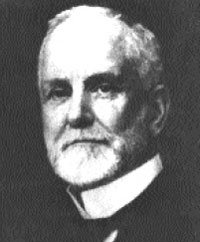
Have been reading a couple books by Borden P. Bowne lately (Metaphysics, and Personalism). Bowne was a professor of philosophy at Boston University a little over 100 years ago. Involved (I believe) with the philosophical circle known as "Boston Personalism". Apparently the group and the school of thought influenced the young Martin Luther King.
Not easy reading for me. I'm not well-versed in philosophy. The mind tends to wander. But Bowne's perspective seems to chime with my own vague hunches about the nature of things. I've always thought of poetry as a counter-force against positivism, materialism, determinism - the supposedly "objective" dehumanization and disenchantment of reality.
In fact Bowne provides a pretty forceful rational and philosophical defense of theism and "personhood". I'm a little surprised his writings are not better known today. He's not merely a Berkeleyan idealist. Nor is he some kind of American pragmatist. Rather he finds a middle way between "common sense" pragmatism (ie. all our knowledge ultimately derives from - and involves a rational abstraction from - ordinary experience) and Kantian idealism (ie. human consciousness orders & thereby interprets any and all experience whatsoever - the mind's insight is what we know).
Experience is not merely a phantasm of consciousness (as in Berkeley). Things are real, things have concrete reality. But mind is not a "thing" : and mind provides the only continuity, freedom, and truth that we know. Bowne posits a sharp (a "metaphysical") divide between invisible mind (or soul, or spirit, or personhood) and the phenomenal world of things. And yet he doesn't presume to define or theorize how "things" came into being. His Occam's razor shreds (satirically) a lot of pretentious theorizing about "being" and "phenomena" etc. He posits a strict difference between the finite and the infinite. And yet he proposes a kinship between limited, finite human mind (consciousness, spirit) and the infinite creative personhood (consciousness, spirit) which must be the creative origin of things. Nothing else will do.
Bowne is not a tendentious apologist for theism : instead, he slowly explores the origins of determinism, positivism, and materialism in our "common sense" response to the apparent "thickness", the substantiality, of things. We are sensualists. We extrapolate from physical, material, bodily experience, and leap to universals and generalizations about how "things must be". We tend to evade the difficult (and very ancient) question about how anything exists at all - how things happen to be (from nothing).
Again, Bowne doesn't presume to answer this question. He just finds a rational way to propose that an infinite creative Mind or Spirit is the only plausible source of what we call reality.
Philosophy can get you thinking, musing. Perhaps we tend to avoid God because she's actually so close to us. There's no "space" between the roots of our own personhood (our "soul", let's say) and the infinite person - except that dividing line (and it's a thick one) between finite and infinite. But the primal analogy is there, the imago Dei. Bowne demonstrates how what we understand by "personality" or personhood is really invisible, immeasurable - our core identity, our rational, emotional, actively volitional personhood, is an invisible intelligence - a soul, a spirit, a heart & mind. & then Bowne demonstrates how the most rational description of the source or "world-ground" of reality as a whole is none other than some infinite (immeasurable, unlimited) form of this invisible intelligence (heart & mind).
Think of the eloquent poetry of Martin Luther King's analogies (between the spirit of divine Agape and the troubled spirits of an earthly people).
This text from the Book of Joel (2:28) seems apropos : "And it shall come to pass afterward that I will pour out my Spirit upon all flesh; and your sons and your daughters shall prophesy, your old men shall dream dreams, your young men shall see visions..."
We're close here to the fusion of a very archaic vision of reality (eg. we are all children & beneficiaries of Manitou, the "Great Spirit"), with the most contemporary understanding of the same.
Maybe we're at the beginning of a new cultural sense, or common understanding, of reality - which is not that different from a very old sense.
None of this "proves" (philosophically) the specifically Christian declaration (the "good news" of "Father & Son & Spirit"). The Christian declaration is more radical than philosophical argument per se can propound : ie. Jesus is the personal manifestation of God. This is rather an article of faith. But Bowne is one of those thinkers and writers who provides a general, philosophical framework or ground for an approach to (or rational evaluation of) the obscure "witness" of religious (theological) expression.
(p.s. I know I'm not being completely fair to George Berkeley here. This is Bowne's critique and distinction, not mine. Berkeley, to my mind, seems actually very close to Bowne in his "metaphysics".)
5.13.2017
the definitive quid
"I seemed to be living under a bell jar, and yet I felt I was close to something essential. A subtle veil, a thread, barely separated me from the definitive quid." - Eugenio Montale
Once in a while, in the midst of your bibliophiliac meanderings, you happen upon a book like Ezra Pound's would-be "ball of light in one's hands" - the true intellectual manna, the book you've been searching for half-consciously.
Not long ago I tripped over such a book : a work in philosophy by one Borden Parker Bowne, published in Boston (by Houghton Mifflin) in 1908, titled simply Personalism.
This book (and the Cambridge academic group loosely associated with it - now called "Boston Personalism") played a role in Martin Luther King's early thinking. I suppose I was drawn to it for that reason, and due to my own prior interest in "the person", the personal (in an abstract, quasi-philosophical sense). I suppose it was the same focus which had motivated my enthusiasm (7 years or so ago) for the philosophical writings of Michael Polanyi - another advocate for the "person".
I'm not in the mood for strenuous, inadequate paraphrasing tonight. You'll just have to read Bowne's Wikipedia entry, maybe look further yourself. Prof. Wiki calls Bowne "an acute critic of mechanistic determinism, positivism, and naturalism." He was also an acute critic of abstraction, idealism, and totalizing systematics. Nor he was one of those run-of-the-James American pragmatists.
Bowne seems to be located somewhere in that dawn twilight between late-Victorian disenchantment, on the one hand (the Brown Decades), and early 20th-century dynamic physics (relativity, uncertainty, quanta) plus mid-20th-century Existential neo-Medieval (Eliot) suprematism/despair, on the other. He's a very sharp knife... a very free-thinking kind of Methodist minister, if you can imagine that.
What I mean to say : Bowne seems to offer a logical, informed, & convincing philosophical ground for my own more cloudy poetical conceptions. He makes a rational argument for the plausibility of a "metaphysical" universe - originating in a living creative benevolent ineffable divine Person, and manifested (or progressively accomplished) in an experiential reality of free spiritual persons ("souls", you might say - human beings) joined in fellowship. A reality of Persons.
And he's a pretty incisive critic of rival theories : scientific positivism, materialism, determinism - any kind of "objectivity" which reduces human beings to pawns, cannon-fodder, statistics - chips in a cosmic-mechanical system. He shows them to be unthinking extrapolations from both common sense (ordinary experience) and science (the useful application of observation & measurement to ordinary experience) - neither of which give access to meaning in the philosophical sense. The final cause(s) & purpose(s) of existence - beyond both common-sense utility and scientific measurement - have yet to be comprehended.
Bowne provides, I guess, a firm & bright "phenomenology" (probably wrong term) of the Person : not just the physical, embodied individual, but the thinking, feeling, invisible "subject" - the living, breathing personality/soul/spirit - the invisible Me and You beyond physical cycles & change - and related to (stemming from) the original, originary, creative Act of the perfect invisible ineffable universal Spirit-Person in the hidden heart of our own beings, and at the center of the Real. Thus the individual human person exists as an imperfect, partial, limited image or "child" of the Spirit from whom he or she is created (& thus, also, "we hold these truths to be self-evident..." etc.).
Imagine how such a particular philosophical firmness or intellectual integrity might fortify the confessional faith/confidence of someone like Martin Luther King. And to what heights (& depths) that might lead him.
I'm nowhere near being a philosopher. I'm just a poet - but maybe a poet with philosophical tendencies. I've always had an interest - since childhood, I daresay - in the "big picture". My conception of poetry has always harbored a polemical aspect : I'm against the abstract objectification of the human person - the various philosophies, dogmas, pseudo-scientific theories, & ideologies aligned against the human being as a free spiritual-material entity with a future. I think of poetry as a force of expression - a bearing-witness to this living, breathing, personal, metaphysical dimension of the human soul, persisting in relation to that benevolent over-arching Love-Plenitude-Origin-Being we call God.
Many inured cultural habits of the modern mind militate against the patterns of such a viewpoint. But like Eugenio Montale, I feel myself on the edge, walking along a wall topped with broken glass - so near that definitive whatness, just beyond this thin veil of worn threads...
I feel we are on the cusp of a new cultural Aeon or Era. The heavy meteoric Stone (Mandelstam's akme-kamen) of divine Presence hovers near again... the Ghost of Manitou, the leader of the Ghost Dance... the human incarnation, the global human per se, arises at the crossroads of time & reality.
The human soul is integral, invisible, personal... & stands under judgement, in relation (to the horizontal-vertical, the neighbor and the Spirit). Nothing in the universe is either objectified or determined. Your soul is alive as it revolves, turning toward its own intelligible Origin.
Of course, this could all be phony mumbo-jumbo. But poetry stands as a criterion for dialogue, simply because poetry is undetermined by anything but dialogue. It emerges out of the living encounter between speakers & listeners, listeners & speakers. Poetry is the opposite of discourse, lecture, prose - because it recognizes (intuitively) that it bears witness to a creative force both proportional to and incommensurable with itself : the mysterious origin of life, love, beauty, truth (& poetry itself).
I'm not suggesting that poetry per se has some special role in advancing this new Aeon. This is only my own personal application of poetic resources toward a particular polemical end. Poetry & State, in general, should both keep a courteous distance from Religion.
But we have had enough of Man the cipher, Man the factor in an abstract design. We live in a dense world of love & sleep, of conscious & unconscious motive... moving in a dance of form & feeling. Man the spiritual Person abides at the center, amid vast fields of other ineffable Persons (invisible heights & depths).
I believe in the ever-living Spirit, shaping the cosmos toward miraculous reconciliations & renewals. I believe that Beauty is the signature of a creative Mind as Source; & that moral beauty - the beauty of compassionate & selfless love for all Creation - has been imprinted upon human history, like the trace of a smile across the ravaged face of suffering & grief. Mary, Francis... John... the women at the Cross, the Tomb.
The tomb, the crossroad, dead end, turning-point.... anonymous blind alley, where the unknown soldier (Everywoman, Everyman) turns toward the hills. Walk on up there...
Borden Parker Bowne
Subscribe to:
Posts (Atom)